

 Shop All Packaging
 Glass Containers
 Plastic Containers
 Metal Containers
 Cardboard Containers
 Bulk Containers
 Industrial Containers
 Caps / Closures
 Shrink Bands
 Design Custom Labels
 Subscribe & Save Orders
 Shop By Industry
 Custom Packaging
 Pallet Qty Packaging
 SKS Direct Wholesale
 Packaging Equipment
 Help/Info
 New Products
 Promotions
 Newsletters
 Product Specials
 Combo Kit Deals
 Product Closeouts
 Recently Back In Stock





What Plastic Bottles Hold Up Best in Cold Weather?
Comparing HDPE, LDPE, PET, And Polypropylene Bottles And Jars For Cold Storage And Shipping
If you store or ship product through the winter, the plastic bottles you choose make a real difference, because HDPE, LDPE, PET, and polypropylene each have a different low-temperature limit. Here is how they compare, and what to check before you commit.
How Plastic Type Affects Cold Performance
Every plastic material type has a low-temperature point below which it becomes stiffer and more brittle. The figures below are typical resin-level minimum service temperatures from published references. They vary with grade, additives, and wall thickness, and they describe the plastic itself, not a tested bottle, so use them as a way to compare materials, not as a guarantee. We always recommend testing with a free sample before committing to a full production run for any application.
HDPE and LDPE: The Cold-Weather Performers
LDPE and HDPE plastic bottles are typically good down to roughly -50°C to -60°C (-58°F to -76°F), staying flexible and keeping their impact strength in freezer-like conditions, and some specialized HDPE grades go lower. Natural HDPE bottles and LDPE squeeze bottles are common choices for products stored or shipped in the cold. Learn more about HDPE plastic and LDPE plastic on our material info pages.
PET: Good Down to About -40 Degrees
PET is typically good down to about -40°C (-40°F). Below that it loses impact resistance and can become brittle. For most winter shipping and storage, that is cold enough to cover, which makes PET bottles a reasonable choice. See our PET plastic page for more.
Polypropylene: Plan for Brittleness Near Freezing
Standard homopolymer polypropylene tends to become brittle below 0°C (32°F), unless it is an impact copolymer blend made for low temperatures. Many jars and caps are molded from PP, so handle polypropylene jars gently when they are cold and test them first. See our polypropylene plastic page for more.
The Contents Still Matter
Even the most cold-tolerant plastic bottle can bulge or split if a water-based product freezes solid inside it. Leave headspace, and test your formula and bottle together. After cold storage, confirm each cap still seals; our guide to testing a cap for a proper seal before shipping shows how. Browse our plastic bottles to compare materials.
Related Containers & Closures You May Like
 HDPE Plastic Bottles, Natural Boston Round Bottles w/ White Lined Screw Caps
 HDPE Leak Proof Bottles, Natural Wide Mouth Bottles w/ Screw Caps
 Natural HDPE Cylinder Bottles w/ White Lined Screw Caps
 Natural HDPE Cylinder Bottles w/ White Ribbed Snap Caps
 LDPE Plastic Bottles, Natural Boston Round Bottles w/ Black/ Natural Twist Top Caps
 LDPE Plastic Bottles, Natural Dropper Bottles with Streaming Dropper Plug and White Caps
 PET Plastic Bottles, Black Boston Round Bottles w/ Black Smooth Snap Top Caps
 PET Plastic Bottles, Green Boston Round Bottles w/ Gold Disc Top Caps
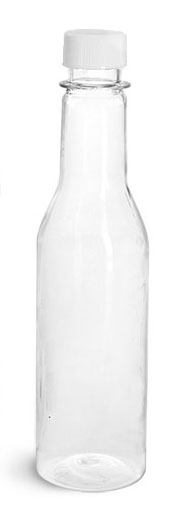 PET Plastic Bottles, Clear Sauce Bottles w/ White Ribbed Lined Caps & Orifice Reducers
Match the Plastic to Your Winter Conditions
The best plastic for cold weather depends on how cold your containers will get, what is inside them, and how they are handled. Browse our plastic bottles and plastic jars to find a material that fits.
This page provides general information only. Temperature figures are typical resin-level values from published references and vary by grade, additives, and wall thickness; they are not performance guarantees for any specific container. Test your own product and packaging before storing or shipping in cold weather.
Why Businesses Choose SKS Bottle & Packaging
SKS Bottle & Packaging makes it easy to order bottles, jars, and packaging supplies online. From fast shipping to flexible savings programs, our goal is to help businesses of all sizes source reliable packaging with a smooth and efficient ordering experience.
Chat with Us