



 Shop All Packaging
 Glass Containers
 Plastic Containers
 Metal Containers
 Cardboard Containers
 Bulk Containers
 Industrial Containers
 Caps / Closures
 Shrink Bands
 Design Custom Labels
 Subscribe & Save Orders
 Shop By Industry
 Custom Packaging
 Pallet Qty Packaging
 SKS Direct Wholesale
 Packaging Equipment
 Help/Info
 New Products
 Promotions
 Newsletters
 Product Specials
 Combo Kit Deals
 Product Closeouts
 Recently Back In Stock





Do Glass Bottles Break When Liquids Freeze?
How Freezing Contents, Headspace, And Sudden Temperature Swings Affect Glass Bottles
Yes, glass bottles can break when liquids freeze, and the cause is usually the contents, not the glass. Understanding how freezing liquids, headspace, and temperature swings interact makes it much easier to store and ship glass bottles safely in cold weather.
Why Freezing Liquids Can Crack Glass Bottles
Water expands as it freezes, increasing in volume by roughly 9 percent. Inside a rigid glass bottle, that expansion has to go somewhere. If the bottle is filled close to the brim, the pressure pushes against the walls and shoulders, and a crack can form even though the glass itself was never close to its cold limit. Ordinary soda-lime glass typically tolerates cold down to about -20°C to -40°C (-4°F to -40°F), according to one manufacturer, but water-based contents freeze at 0°C (32°F), so the contents are usually what fails first.
Which Products Are Most at Risk
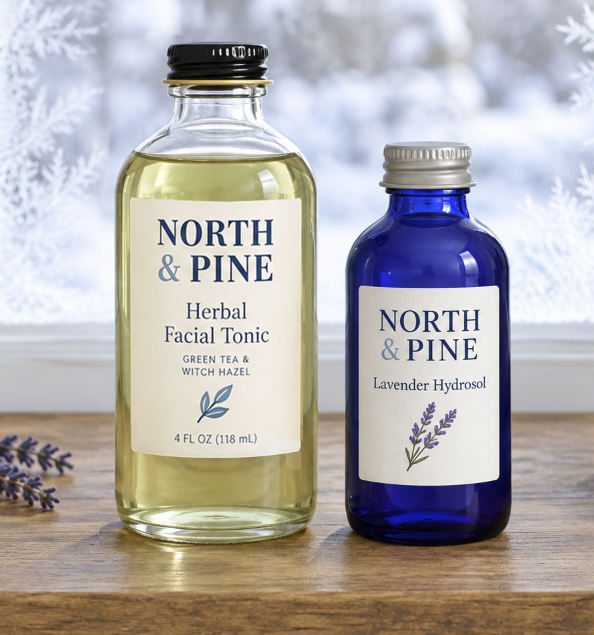
Water-based products are the main concern: hydrosols and floral waters, syrups, beverages, and many sauces and lotions contain enough water to expand as they freeze. Oils tend to thicken or turn cloudy in the cold rather than expand the way water does, and alcohol-heavy formulas freeze at much lower temperatures. Exact behavior depends on the formula, so a bottle that holds up with one product may not with another. A cobalt blue glass bottle full of a water-based tonic faces a very different risk from one full of oil.
Leave Headspace Below the Neck
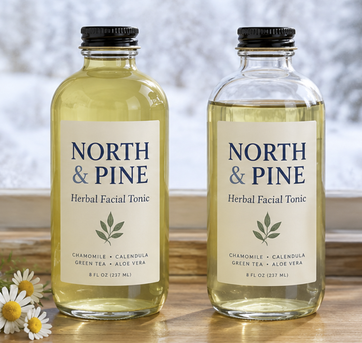
The simplest protection is air space. Filling a clear glass bottle to the brim leaves the contents no room to expand, while leaving space below the neck gives freezing liquid somewhere to go. How much headspace is right depends on the bottle shape, the product, and how cold it will get, so confirm it with a test before filling a full production run.
Watch for Sudden Temperature Swings
Glass can also be stressed by rapid temperature changes, such as carrying a cold bottle straight into a warm room or filling a cold bottle with a warm liquid. Letting bottles warm up gradually, and avoiding large temperature differences between a bottle and its contents, lowers that risk. Exact limits depend on the glass, so treat this as a general precaution.
How to Test Glass Bottles Before Winter Shipping
Fill a few sample bottles with your real product, leave them in the coldest place they are likely to sit, and check for cracks, leaks, and separation once they thaw. Also confirm that each cap still seals; our guide to testing a cap for a proper seal before shipping shows how. Browse our glass bottles in a range of sizes and caps to find a shape that suits your product.
Related Containers & Closures You May Like
 Glass Bottles, Clear Glass Boston Round Bottles w/ Foil Lined Black Metal Caps
 Blue Glass Boston Round Bottles w/ Lined Aluminum Caps
 Clear Glass Boston Round Bottles w/ Lined Aluminum Caps
 Glass Bottles, Frosted Glass Boston Round Bottles w/ Lined Aluminum Caps
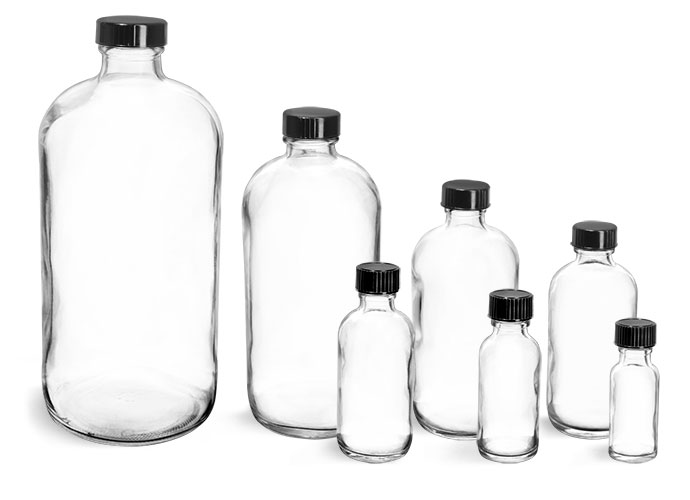 Glass Bottles, Clear Glass Boston Round Bottles w/ Black Phenolic Cone Lined Caps
 Glass Bottles, Clear Glass Boston Round Bottles w/ Black Brush Caps
 Amber Glass Boston Round Bottles w/ Lined Aluminum Caps
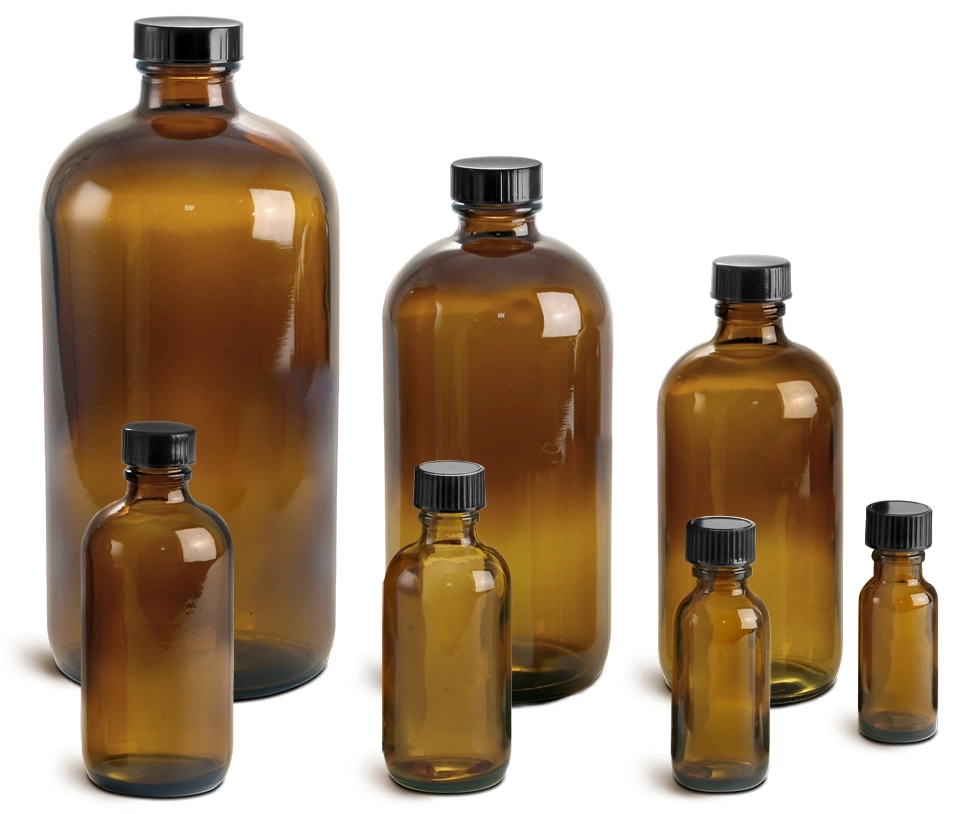 Amber Glass Bottles, Boston Round Bottles w/ Black Cone Lined Caps
 Blue Glass Bottles, Boston Round Bottles w/ Black Phenolic Cone Lined Caps
Choose Glass Bottles Built Around Your Product
Glass bottles handle cold well when they are filled with the right amount of the right product. Browse our full range of glass bottles to find the right size, color, and cap for your winter storage and shipping needs.
This page provides general information only. Temperature tolerances vary by glass type and manufacturer, and freezing behavior varies by formula. Test your own product and packaging before storing or shipping in cold weather.
Why Businesses Choose SKS Bottle & Packaging
SKS Bottle & Packaging makes it easy to order bottles, jars, and packaging supplies online. From fast shipping to flexible savings programs, our goal is to help businesses of all sizes source reliable packaging with a smooth and efficient ordering experience.
Chat with Us