


 Shop All Packaging
 Glass Containers
 Plastic Containers
 Metal Containers
 Cardboard Containers
 Bulk Containers
 Industrial Containers
 Caps / Closures
 Shrink Bands
 Design Custom Labels
 Subscribe & Save Orders
 Shop By Industry
 Custom Packaging
 Pallet Qty Packaging
 SKS Direct Wholesale
 Packaging Equipment
 Help/Info
 New Products
 Promotions
 Newsletters
 Product Specials
 Combo Kit Deals
 Product Closeouts
 Recently Back In Stock









Buyer's Guide: Nutritional Supplement Containers
Protecting Potency From Manufacturing Through the Last Dose
Supplement packaging has to protect a product's potency over a long shelf life while meeting the labeling and safety expectations customers have come to expect from the category. This guide covers what actually protects a formula through months of storage and handling when sourcing nutritional supplement containers, from moisture protection to closure safety. Visit our nutritional supplement containers industry page for the full range of options.
Moisture Is the Enemy of Most Supplement Formulas
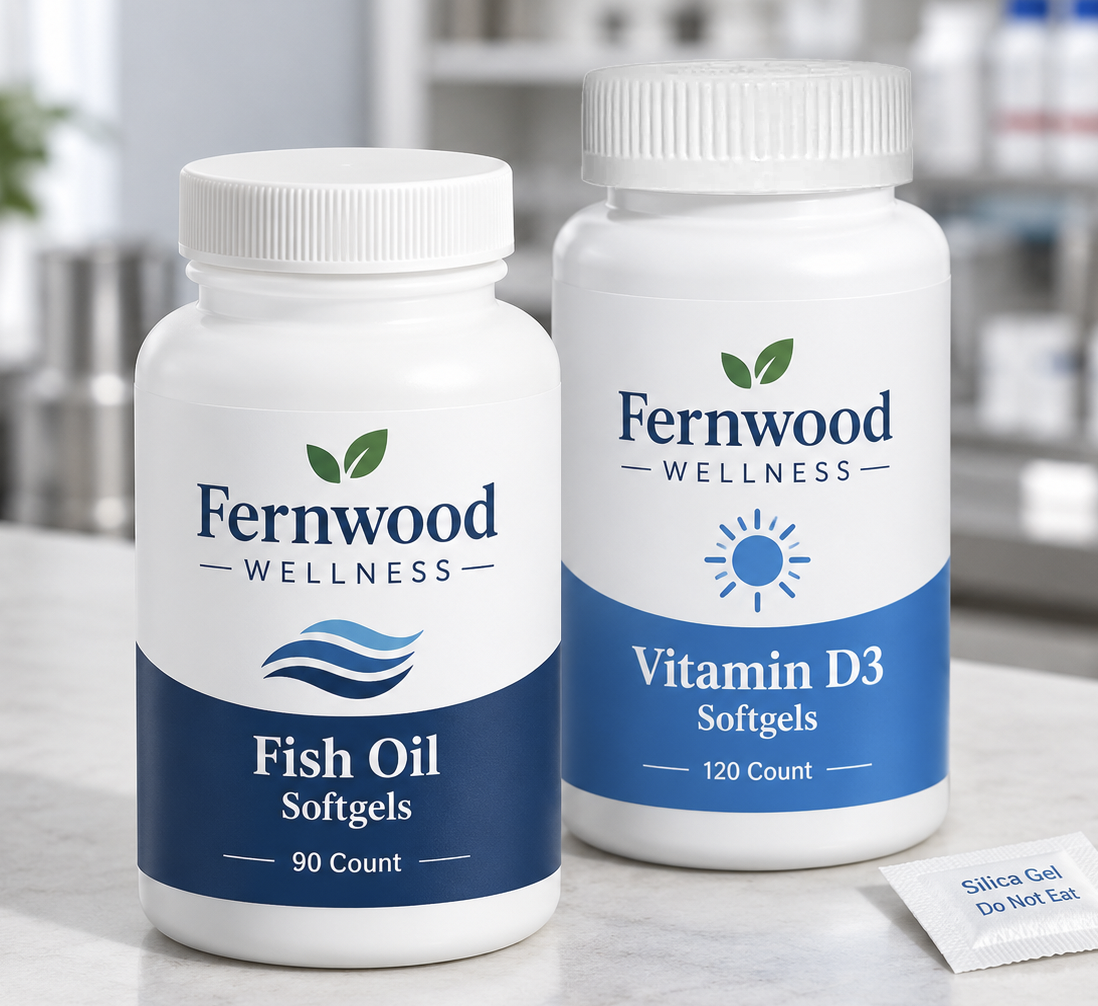
Powders, capsules, and probiotics are all sensitive to moisture and oxygen exposure, which can degrade potency well before a product's expiration date - meaning the packaging itself is doing real quality-control work, not just holding the product. HDPE plastic bottles remain the category standard because the material offers a genuinely strong moisture barrier at a manageable cost and weight, important for a product often shipped and sold at scale. Many supplement brands also include a desiccant packet inside the bottle as an added layer of protection, particularly for products with a longer intended shelf life or sensitivity to environmental exposure - worth sourcing separately if your formula calls for it, since it's a low-cost way to extend real shelf stability. Glass remains an option for brands prioritizing a premium look or working with a formula that has specific compatibility needs glass better serves, though the added weight and breakage risk are real tradeoffs against plastic's practical advantages.
Child-Resistant and Tamper-Evident Requirements
Depending on the specific formula and its labeled dosing, many supplement products fall under regulations requiring a child-resistant cap, particularly for products containing iron or other ingredients that pose a real risk if a child ingests an excessive amount. Even where not strictly required, many brands choose child-resistant closures as a precautionary measure and a trust signal to health-conscious customers. Tamper-evident features, whether a sealed inner liner beneath the cap or an outer shrink band, are similarly common across the category, since customers buying an ingestible product expect visible proof it hasn't been opened before purchase.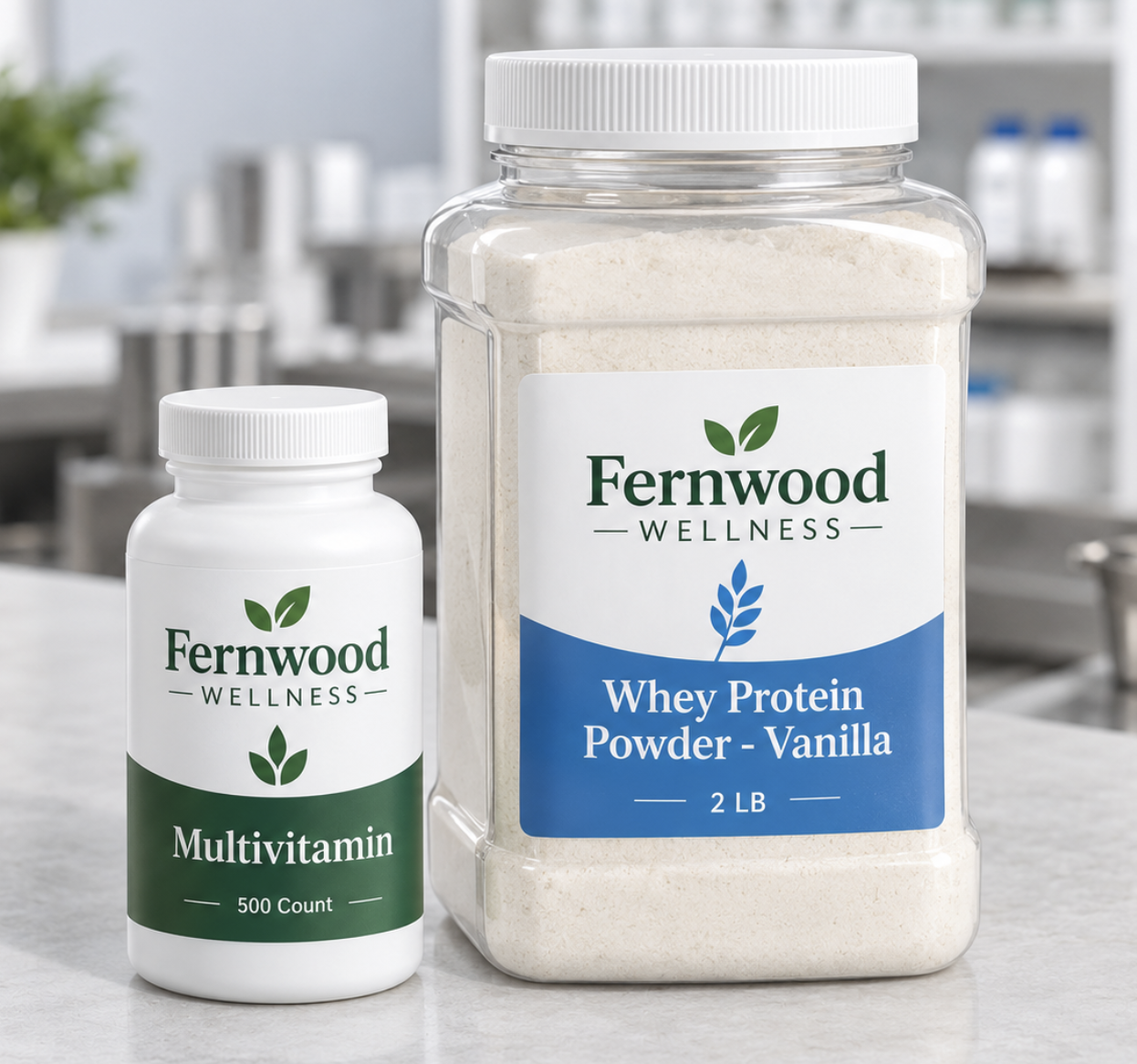
- HDPE plastic offers strong, cost-effective moisture protection
- Desiccant packets add protection for especially moisture-sensitive formulas
- Child-resistant caps are required for many formulas, especially those containing iron
- Tamper-evident seals build customer trust in an ingestible product
Container Sizing for Capsule and Powder Counts
Bottle size should be planned around your actual fill count and dosage form, since capsules, tablets, and powders all pack differently by volume. A nutritional supplement container sized correctly to its labeled count avoids the appearance of a half-empty container, which can undermine customer trust even when the count is accurate. Powder supplements in particular benefit from a wide-mouth format that makes scooping easier and reduces product waste compared to a narrow-neck bottle.Nutritional Supplement Containers You May Like
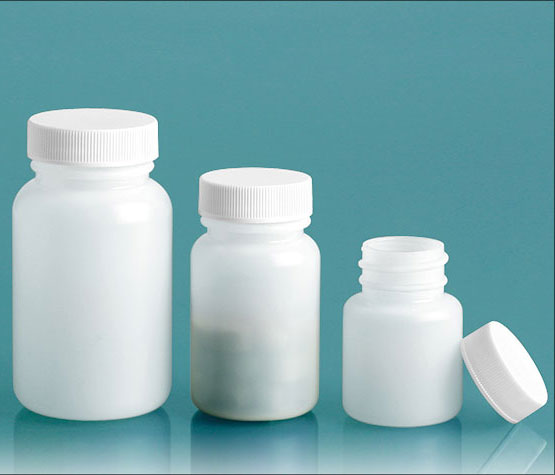 HDPE Plastic Bottles, Natural Wide Mouth Pharmaceutical Bottles w/ White Lined Screw Caps
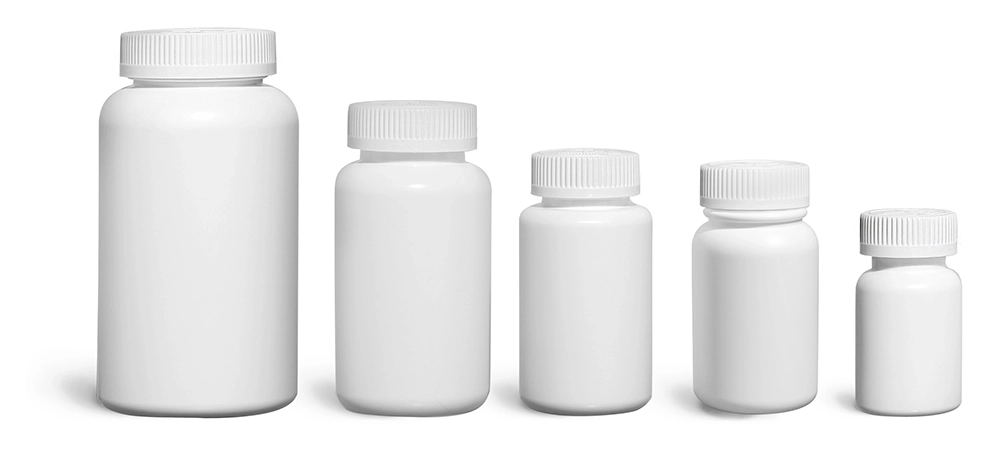 HDPE Plastic Bottles, White Pharmaceutical Round Bottles w/ White Child Resistant Caps
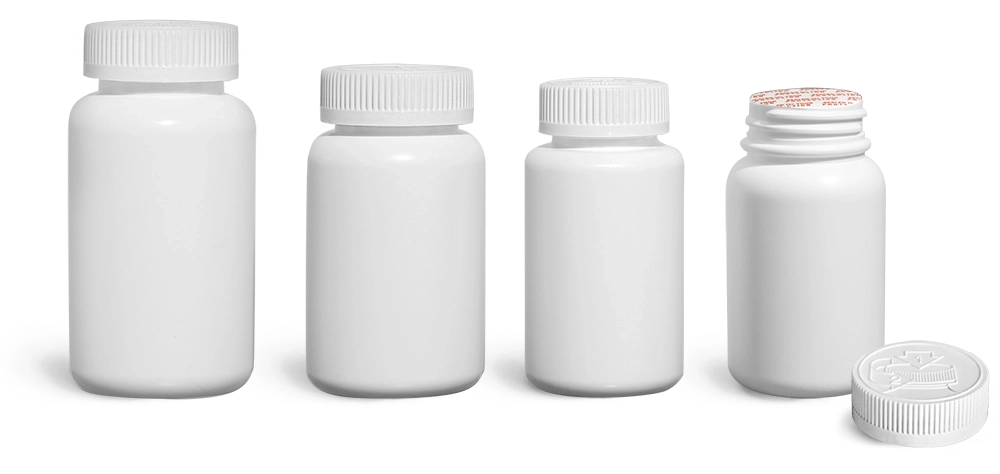 HDPE Plastic Bottles, White Pharmaceutical Round Bottles w/ White Induction Lined Child Resistant Caps
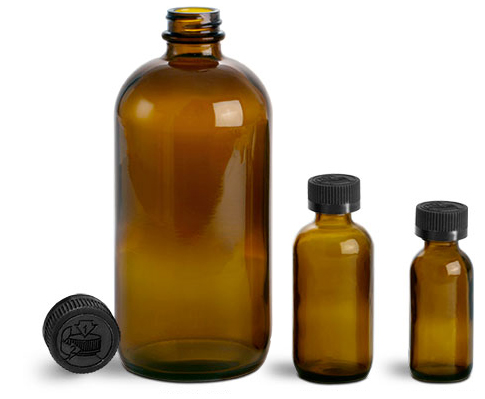 Amber Glass Bottles, Boston Round Bottles w/ Black Child Resistant Lined Caps
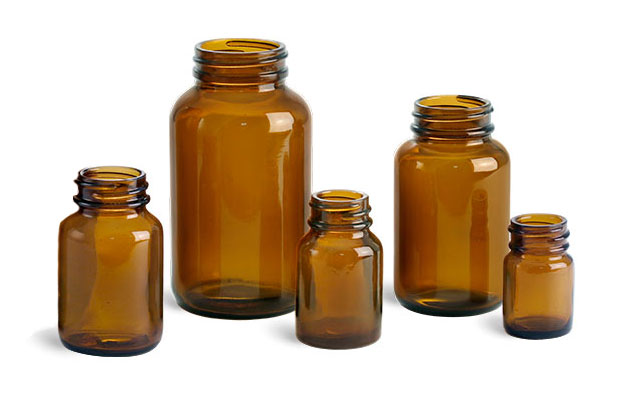 Amber Glass Pharmaceutical Round Bottles (Bulk), Caps NOT Included
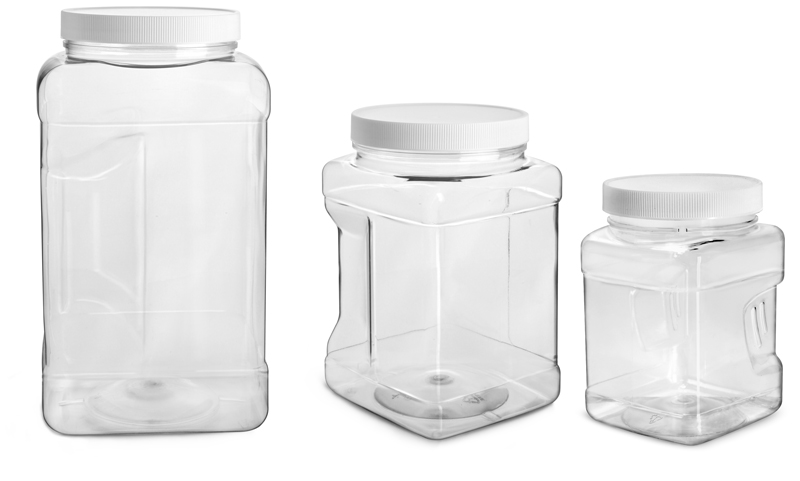 PET Plastic Jars, Clear Square Gripped Wide Mouth Jars w/ White PE Lined Caps
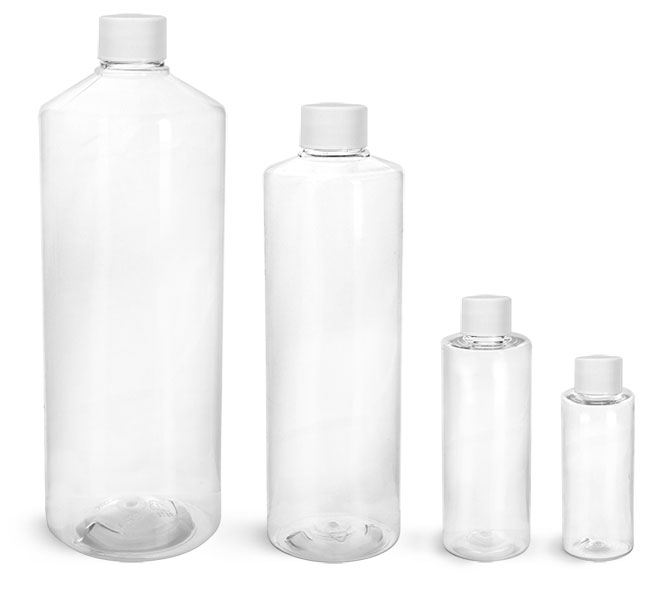 PET Plastic Bottles, Clear Cylinder Bottles w/ White Lined Screw Caps
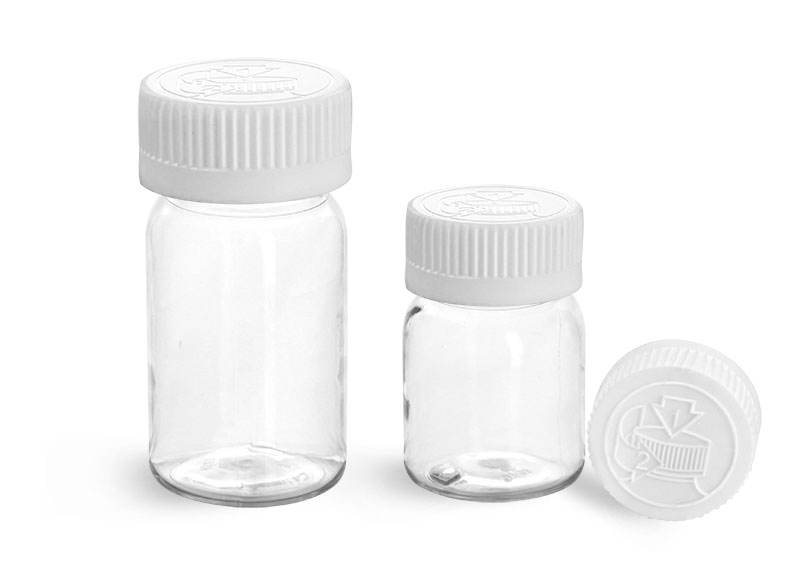 PET Plastic Bottles, Clear Wide Mouth Round Bottles w/ White Child Resistant Lined Caps
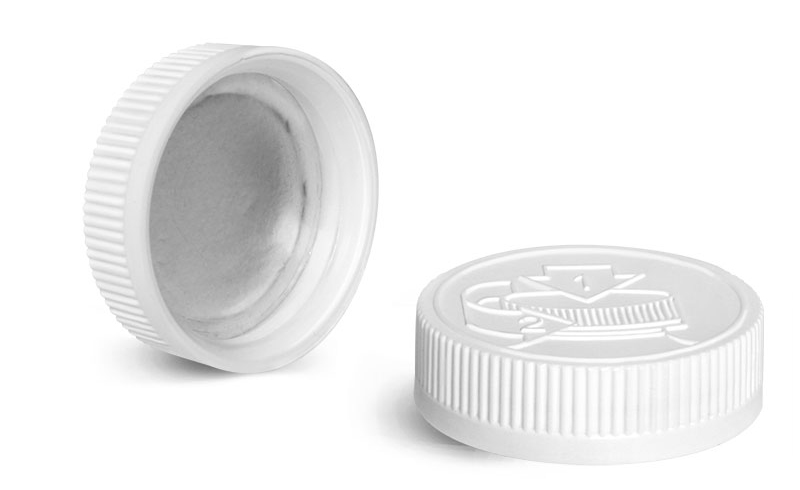 Child Resistant Caps, White Induction Lined Child Resistant Caps w/ Universal Picture
Nutritional Supplement Containers FAQ
Supplement packaging carries real responsibility for protecting a product's effectiveness over its full shelf life, while also meeting the safety and trust signals customers expect from an ingestible product. Moisture protection, appropriate child-resistance, and tamper-evidence should all factor into your container decision from the start.
Do All Supplements Need Child-Resistant Caps?
Not all, but many formulas, particularly those containing iron, fall under regulations requiring child-resistant closures, and many brands choose them voluntarily as an added safety measure.
Should I Include a Desiccant Packet in My Supplement Bottle?
For moisture-sensitive formulas like powders, capsules, and probiotics, a desiccant packet is a low-cost way to meaningfully extend real shelf stability, particularly for products with a longer intended shelf life.
Is Glass or Plastic Better for Supplements?
HDPE plastic is the category standard due to its strong moisture barrier, light weight, and cost-effectiveness, though glass remains an option for brands prioritizing a premium look or specific formula compatibility.
What Size Bottle Should I Use for My Capsule Count?
Bottle size should be planned around your actual fill count and dosage form, since nutritional supplement containers that look half-empty relative to their labeled count can undermine customer trust even when the count is accurate.
Is Tamper-Evident Packaging Required for Supplements?
It's not universally required by law, but it's widely expected in the category, since customers buying an ingestible product generally expect visible proof it hasn't been opened before purchase.
Why Businesses Choose SKS Bottle & Packaging
SKS Bottle & Packaging makes it easy to order bottles, jars, and packaging supplies online. From fast shipping to flexible savings programs, our goal is to help businesses of all sizes source reliable packaging with a smooth and efficient ordering experience.
Chat with Us