




 Shop All Packaging
 Glass Containers
 Plastic Containers
 Metal Containers
 Cardboard Containers
 Bulk Containers
 Industrial Containers
 Caps / Closures
 Shrink Bands
 Design Custom Labels
 Subscribe & Save Orders
 Shop By Industry
 Custom Packaging
 Pallet Qty Packaging
 SKS Direct Wholesale
 Packaging Equipment
 Help/Info
 New Products
 Promotions
 Newsletters
 Product Specials
 Combo Kit Deals
 Product Closeouts
 Recently Back In Stock









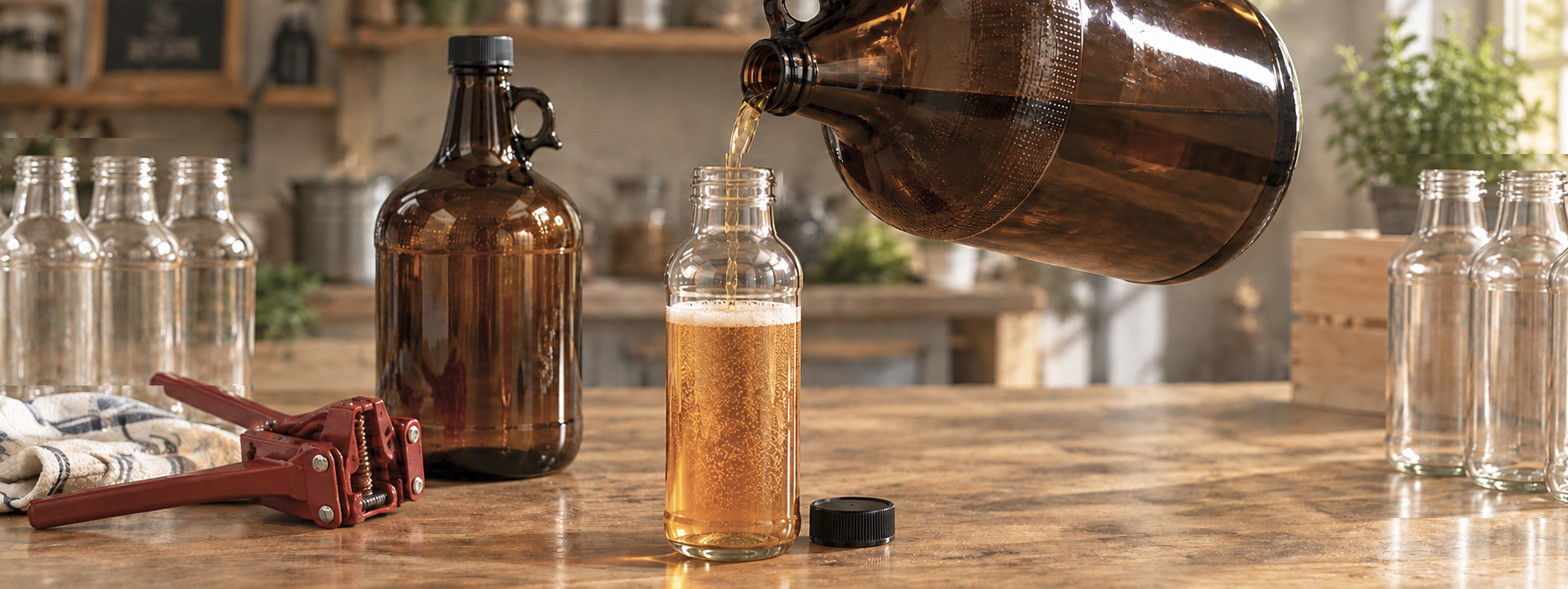
Buyer's Guide: Home Brewing & Fermentation Containers
Matching Bottle Material and Closure to Your Beverage's Carbonation
Whether you're bottling your first batch of home brew or scaling toward small commercial production, container choice directly affects carbonation safety, shelf stability, and how your finished product looks to customers. This guide covers the real decisions behind sourcing home brewing containers, from pressure-safe materials to closure type and batch sizing. Browse our full home brew and fermentation packaging page for the complete range.
Why Carbonation Level Drives Container Choice
The single biggest mistake new home brewers make with packaging isn't picking an ugly bottle - it's picking a container not rated for how much pressure their finished beverage will build during conditioning. Bottle-conditioned kombucha and lightly carbonated ciders continue fermenting after bottling, building real internal pressure that an unrated container can fail under. Before choosing a bottle based on looks or cost, confirm it's genuinely rated for however much carbonation your beverage will build - this is a safety issue, not just a packaging preference, and it's especially important to get right for anything more than mild effervescence.
Material: Glass Home Brewing Bottles vs. Plastic Jugs
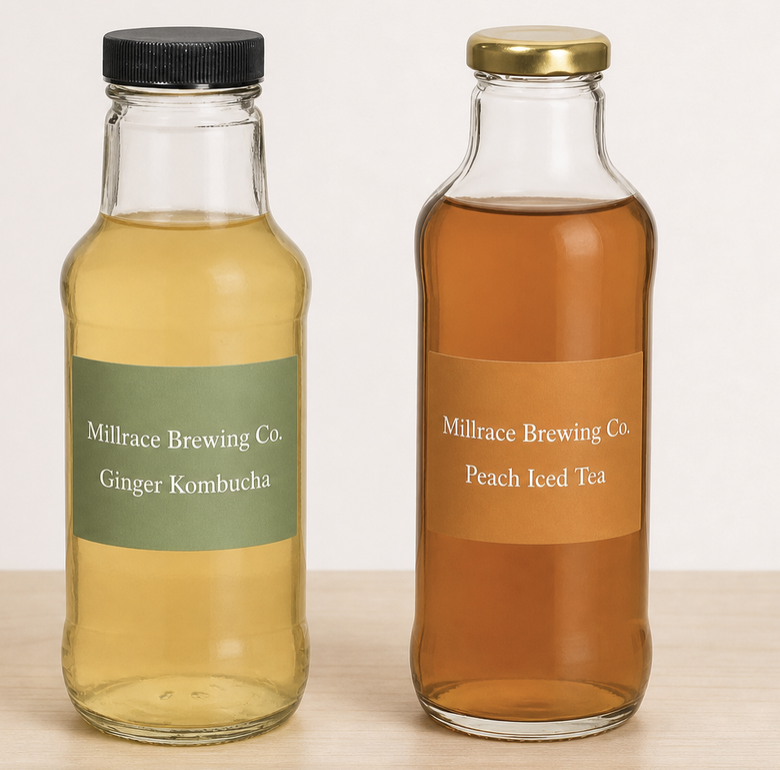
Glass beverage bottles remain the standard for home-fermented beverages because glass safely withstands the pressure of bottle conditioning without the oxygen permeation some plastics allow over time. Glass is also completely inert, meaning it won't impart any flavor into your finished beverage, and its weight and clarity give a genuinely premium feel if you're selling bottled product commercially. For active fermentation rather than final packaging, larger plastic jugs made from food-grade HDPE offer a lighter, shatterproof alternative many home brewers use before transferring to glass for final bottling. Because plastic is more oxygen-permeable than glass over extended periods, it's better suited to shorter-term fermentation than long-term aging or shelf-stable finished product.- Glass: pressure-safe for mild carbonation, oxygen-impermeable, ideal for bottle-conditioned beverages
- Plastic jugs: lightweight, shatterproof, well suited to active fermentation
- Both are widely available in bulk for larger batch sizes
Closures: Corks and Screw Caps for Fermentation
The right closure depends on what you're brewing. Cork stoppers suit still or lightly carbonated beverages like wine or still cider, offering a classic presentation along with controlled air exchange some fermented products benefit from during aging. For kombucha, iced tea, and other still or lightly effervescent beverages, a standard ribbed screw cap or metal lug cap creates a reliable seal without the cost of a specialized closure. One important note: none of these standard closures are engineered to hold the sustained internal pressure that fully bottle-conditioned, actively carbonating beer requires. If you're brewing a genuinely pressurized beverage, you'll need a closure specifically pressure-tested for that purpose - confirm any closure's real pressure rating with its manufacturer before using it for a beverage that continues fermenting and building pressure after bottling.
Planning Your Batch and Bottling Timeline
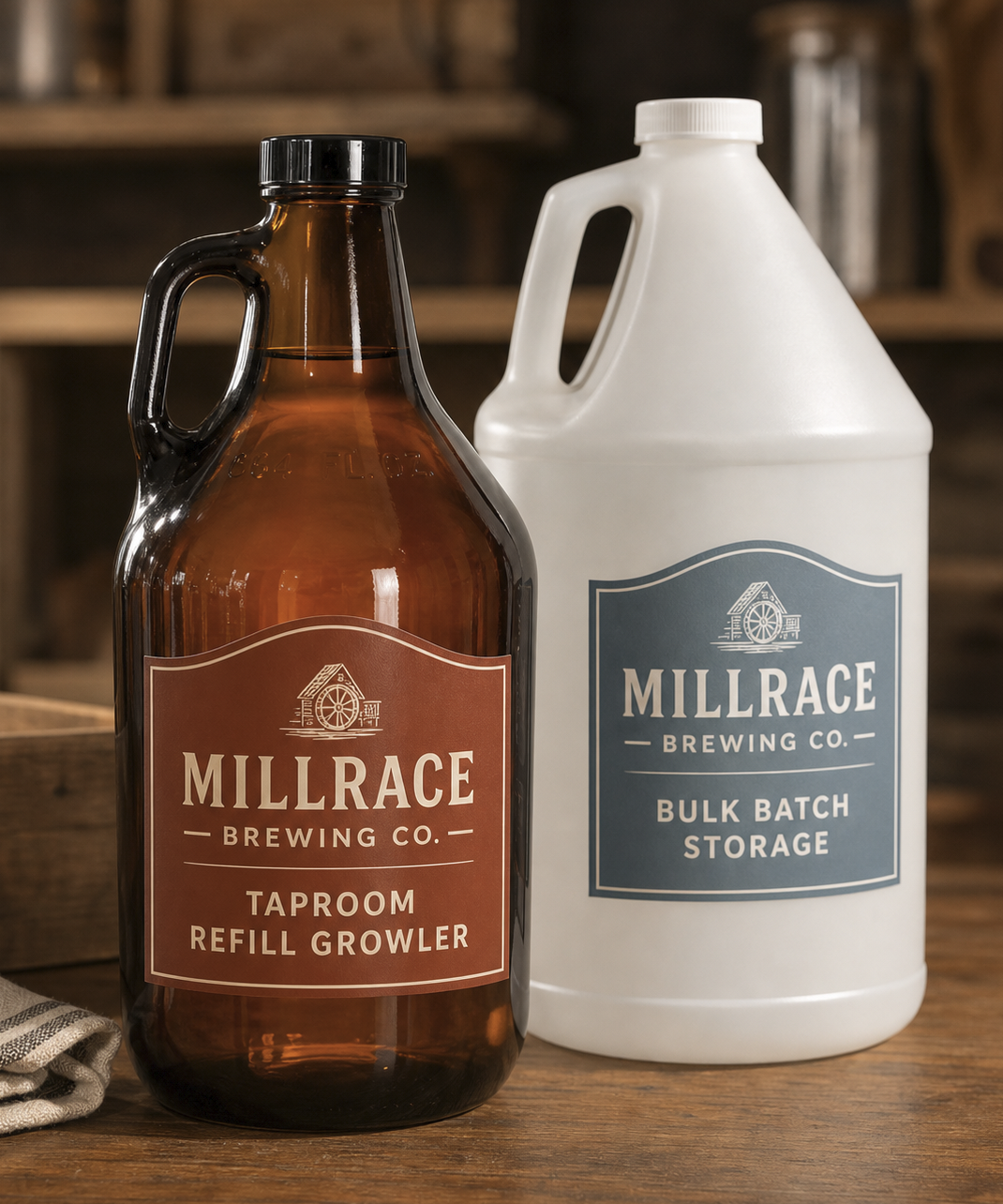
Before your first bottling day, calculate how many bottles your batch will actually yield based on your fermenter's volume, and order with some buffer for breakage or test pours. Standard 10 oz and 16 oz formats align with consumer expectations and make this math straightforward, while growler-style 64 oz jugs work well for taproom fills or direct-to-consumer refill programs rather than final packaged sale. As you scale from single batches toward regular production, buying in bulk case quantities meaningfully reduces your per-unit cost, and standardizing on one or two bottle sizes simplifies both labeling and case-pack logistics as your operation grows.Home Brewing & Fermentation Containers You May Like
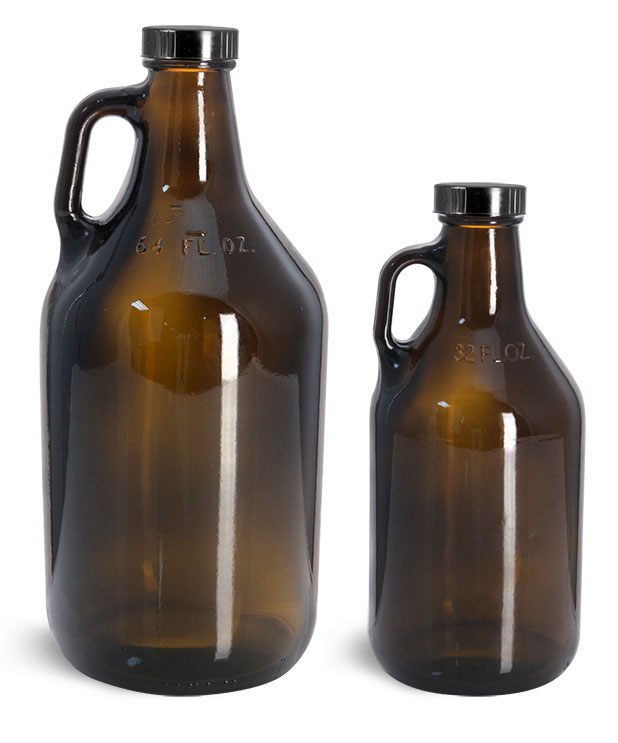 Amber Glass Bottles, Handle Jugs w/ Black Phenolic Cone Lined Caps
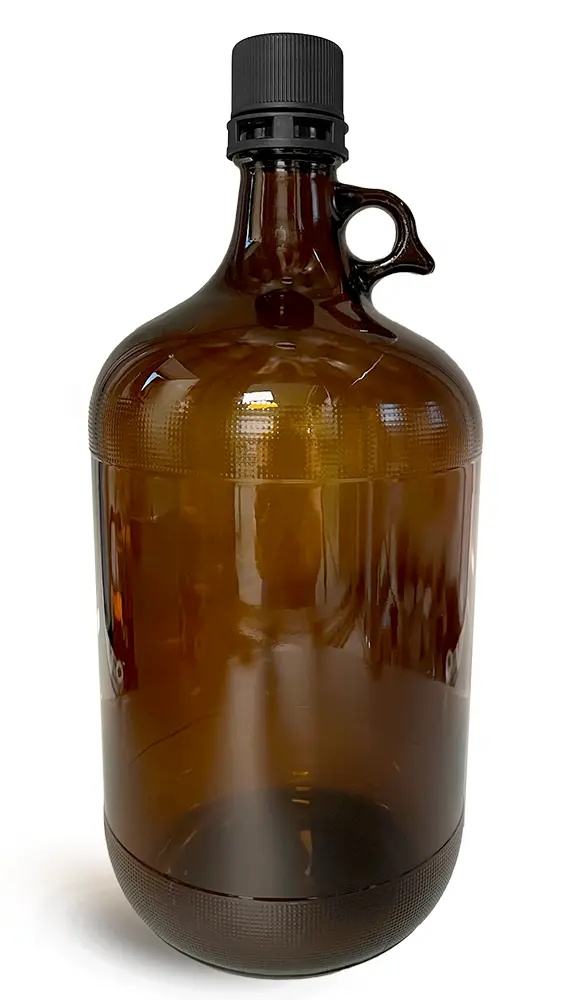 4 Liter Amber Glass Jugs w/ F-422 Lined Black Tamper Evident Caps
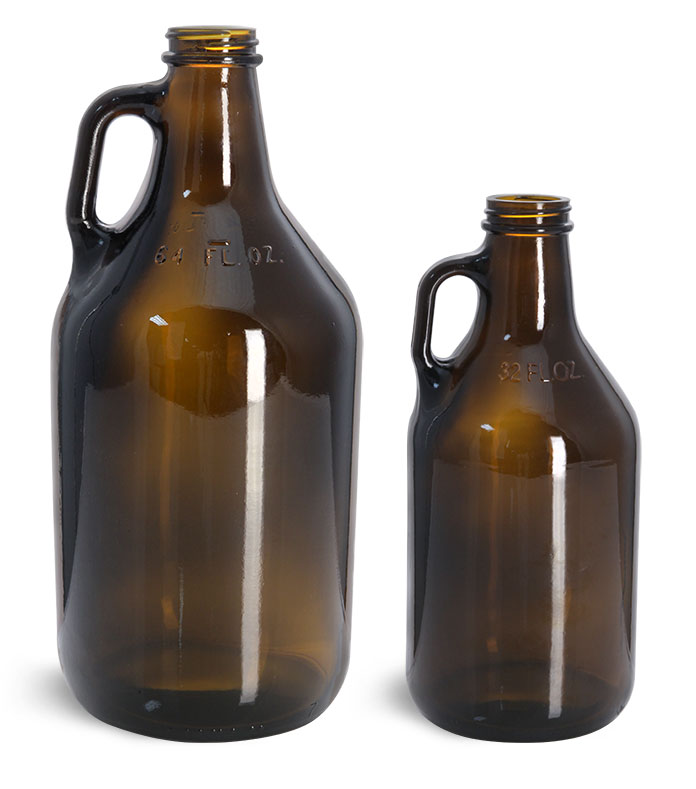 64 oz Amber Glass Round Growler Jugs (Bulk), Caps NOT Included
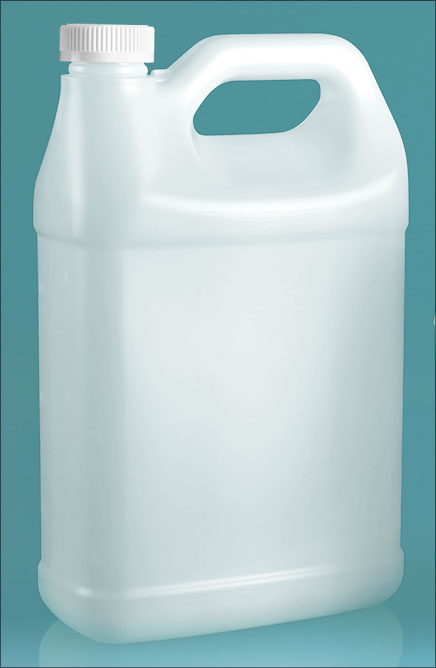 HDPE Plastic Jugs, Natural F-Style Jugs w/ White PE Lined Child Resistant Caps
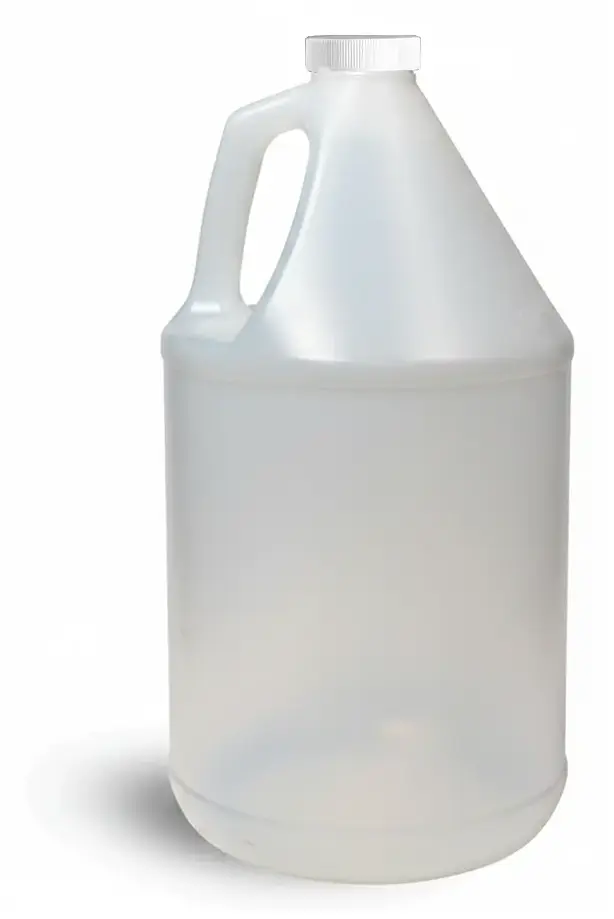 HDPE Plastic Jugs, Natural Jugs w/ White Ribbed PE Lined Caps
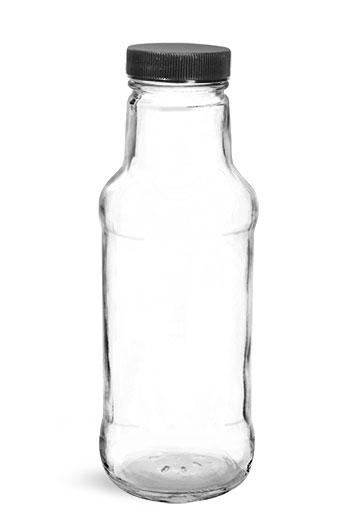 Glass Bottles, Clear Glass Beverage Bottles w/ Black Ribbed PE Lined Caps
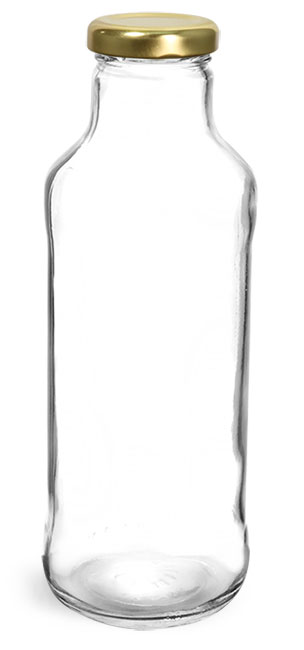 Glass Bottles, Clear Glass Beverage Bottles w/ Gold Metal Lugs Caps
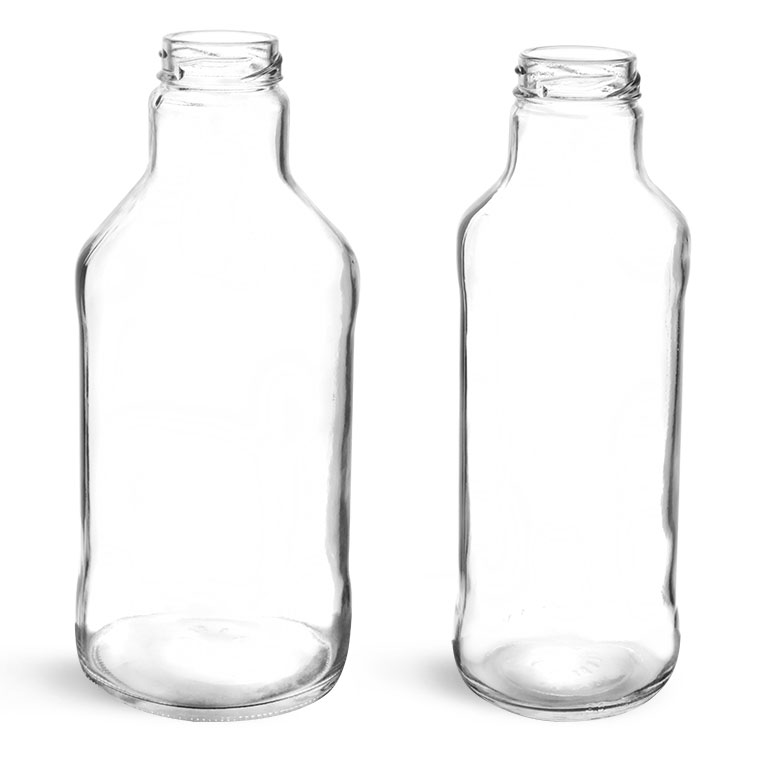 Clear Glass Beverage Bottles (Bulk) Caps NOT Included
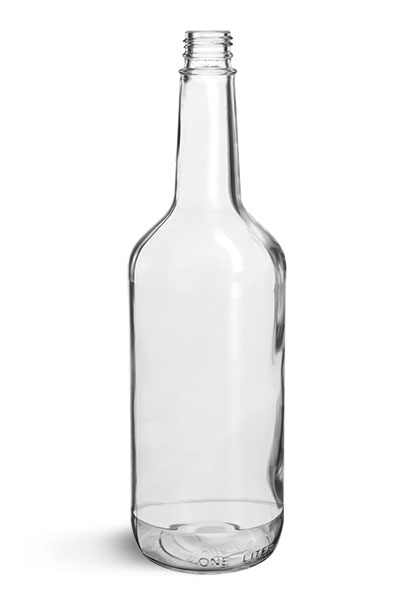 1 Liter Clear Glass Liquor Bottles
Home Brewing Containers FAQ
Matching your container and closure to your beverage's actual carbonation level is the single most important packaging decision in home brewing - it's a safety issue first, and a shelf-appeal decision second.
Can I Use Plastic Bottles for Carbonated Home Brew?
Plastic is more permeable to oxygen than glass over time, so glass is generally the safer, more reliable choice for carbonated, bottle-conditioned beverages meant for longer-term storage.
Is There a Real Safety Risk to Using the Wrong Bottle?
Yes - a container not rated for pressurized beverages can fail under the internal pressure that builds during bottle conditioning, which is a genuine safety concern, not just a quality issue.
What Size Bottle Should I Use for Home Brewed Beer?
12 oz bottles are the most common standard size, aligning with consumer expectations and making batch-to-bottle-count math straightforward.
Are Growler Jugs Good for Fermentation or Just Serving?
Growler jugs are primarily designed for short-term storage and serving rather than active fermentation, since they aren't built to safely manage ongoing carbonation pressure over extended periods.
Why Businesses Choose SKS Bottle & Packaging
SKS Bottle & Packaging makes it easy to order bottles, jars, and packaging supplies online. From fast shipping to flexible savings programs, our goal is to help businesses of all sizes source reliable packaging with a smooth and efficient ordering experience.
Chat with Us