


 Shop All Packaging
 Glass Containers
 Plastic Containers
 Metal Containers
 Cardboard Containers
 Bulk Containers
 Industrial Containers
 Caps / Closures
 Shrink Bands
 Design Custom Labels
 Subscribe & Save Orders
 Shop By Industry
 Custom Packaging
 Pallet Qty Packaging
 SKS Direct Wholesale
 Packaging Equipment
 Help/Info
 New Products
 Promotions
 Newsletters
 Product Specials
 Combo Kit Deals
 Product Closeouts
 Recently Back In Stock









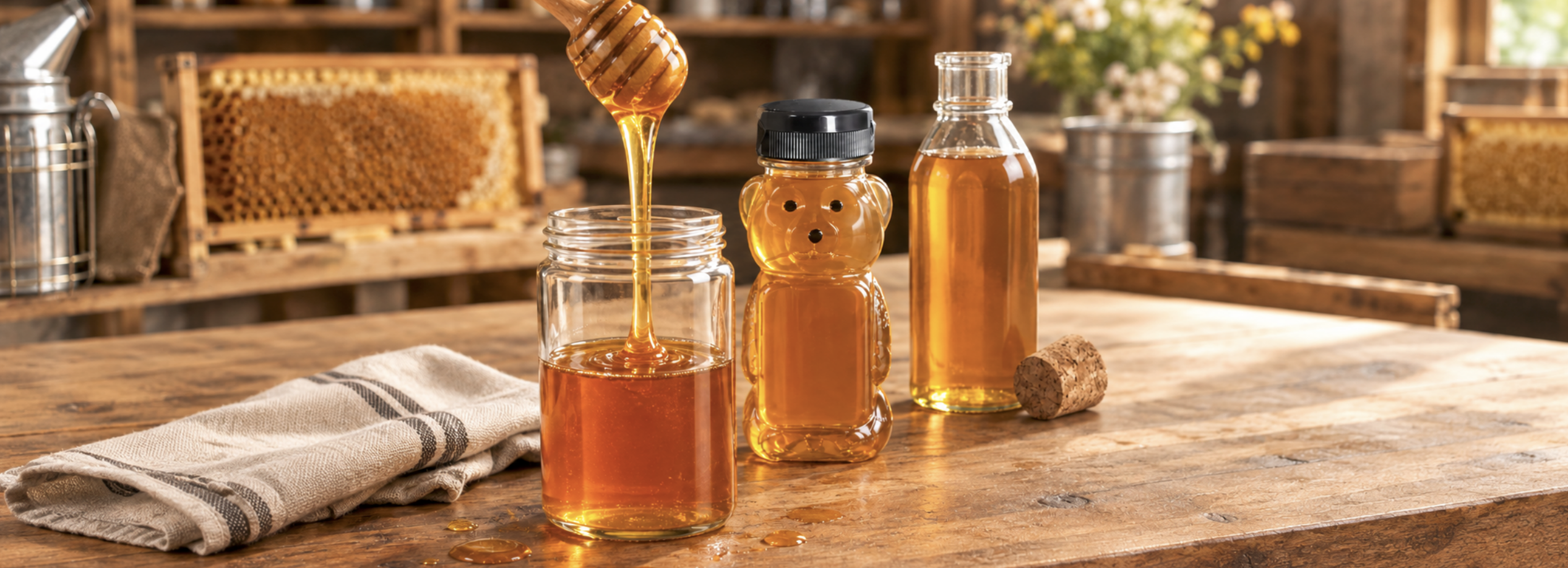
Buyer's Guide: Beekeeping & Honey Containers
Packaging That Handles Honey's Weight, Viscosity & Crystallization
From a backyard hive to a small commercial apiary, honey's natural weight and viscosity make it a genuinely different packaging challenge than a typical liquid product. This guide covers the real decisions behind sourcing beekeeping & honey containers: material choice, closures that don't seize up with sticky residue, and sizing for both retail and bulk sale. Visit our beekeeping industry page for the full range of options.
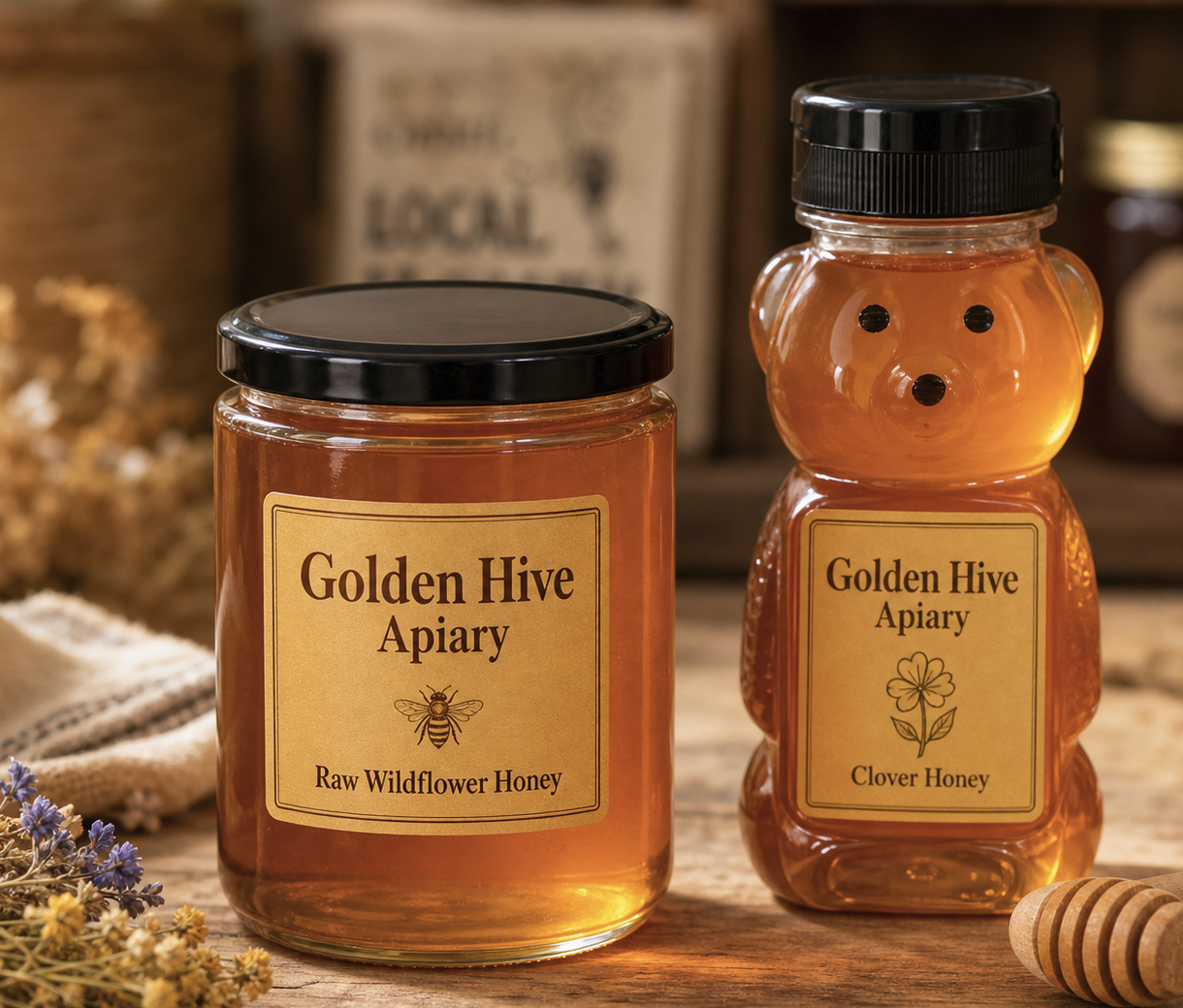
Honey Is Sold by Weight, Not Volume
Unlike water-based liquids, honey is dense enough that a container's fluid ounce rating doesn't map directly onto the weight a customer expects on the label. A 12 oz jar by volume will hold roughly a pound of honey by weight, and getting this conversion wrong on your label is a labeling accuracy problem, not just a rounding error - double-check your actual fill weight in your specific container before finalizing net-weight labeling, rather than assuming a standard fluid-ounce-to-weight conversion applies.
Material: Plastic vs. Glass Jars for Honey
Glass jars remain the traditional choice for bottled honey, offering a premium, farmers-market-ready presentation that lets customers see the honey's natural color and clarity through the container wall. Glass is also completely nonporous and chemically inert, meaning it won't interact with honey's natural acidity over long-term storage, and it holds up well to the gentle warming some beekeepers use to prevent crystallization before bottling. For squeeze-style dispensing, plastic bottles made from food-grade PET offer genuine practical advantages: a squeezable bottle lets customers dispense honey one-handed without a sticky knife or spoon, and the lighter weight and shatter-resistance make plastic a popular choice for honey sold at farmers markets or shipped directly to customers.- Glass: premium presentation, chemically inert, showcases honey's natural color
- Plastic: squeezable, lightweight, shatter-resistant for market and shipping use
- Both materials are food-safe and widely used across the honey industry
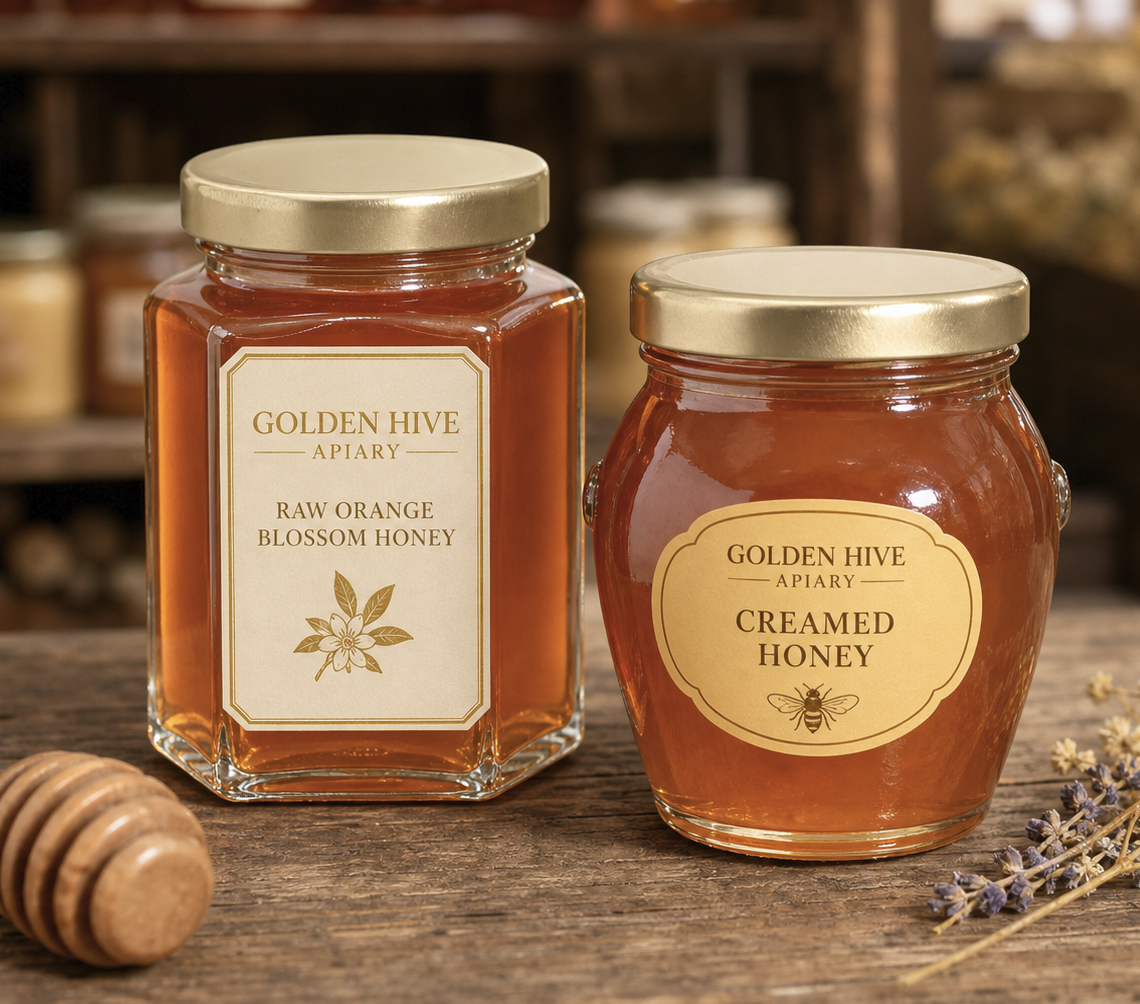
Why Closure Fit Matters More for Honey Than Most Products
Honey's naturally sticky consistency makes closure choice more important than it might be for a thinner liquid. A well-fitted lined plastisol lined cap helps prevent honey from seeping into the threads of a jar or bottle over time, which can make a container genuinely difficult to reopen after sitting on a shelf. For squeeze bottles specifically, a flip-top dispensing cap with a properly sized orifice lets customers control portion size without excessive dripping - a detail worth testing with your specific honey's viscosity, since thinner varieties dispense differently than thicker, more crystallized ones, and a cap that works for one may drip or clog with the other.Sizing for Retail, Gifts, and Bulk Sale
Honey is typically sold across a range of sizes depending on the sales channel: smaller 2 to 4 oz jars work well for sampler sizes, gift sets, or wedding favors, while 8 to 16 oz sizes cover the bulk of everyday retail sales at farmers markets and small grocers. For beekeepers selling in bulk to other producers or to volume buyers, larger jugs in 32 oz or gallon-equivalent sizes reduce per-unit packaging cost significantly. Offering at least two sizes - a smaller trial or gift size alongside a standard retail size - helps capture both first-time buyers and repeat customers restocking a household staple.Beekeeping & Honey Containers You May Like
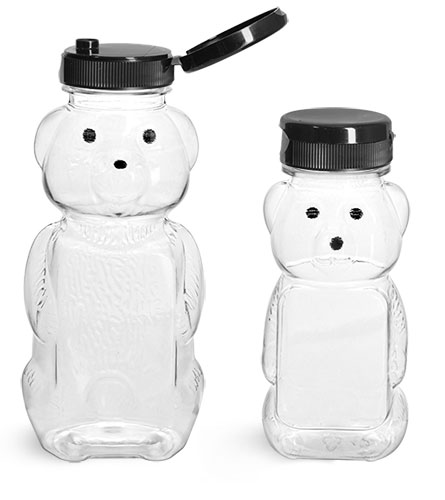 PET Plastic Bottles, Clear Honey Bear Bottles w/ Black Snap-Top Caps
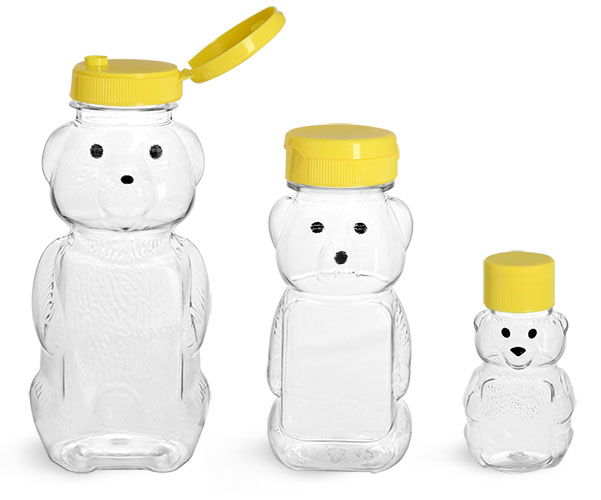 PET Plastic Bottles, Clear Honey Bear Bottles w/ Yellow Lined Caps
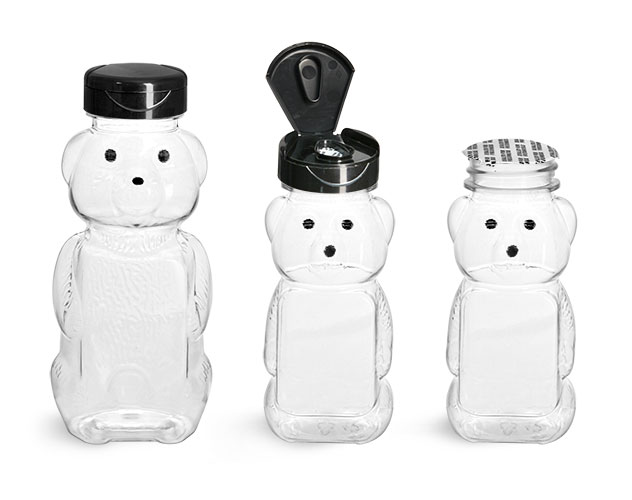 PET Plastic Bottles, Clear Honey Bear w/ Black Polypropylene Induction Lined Snap Top Cap
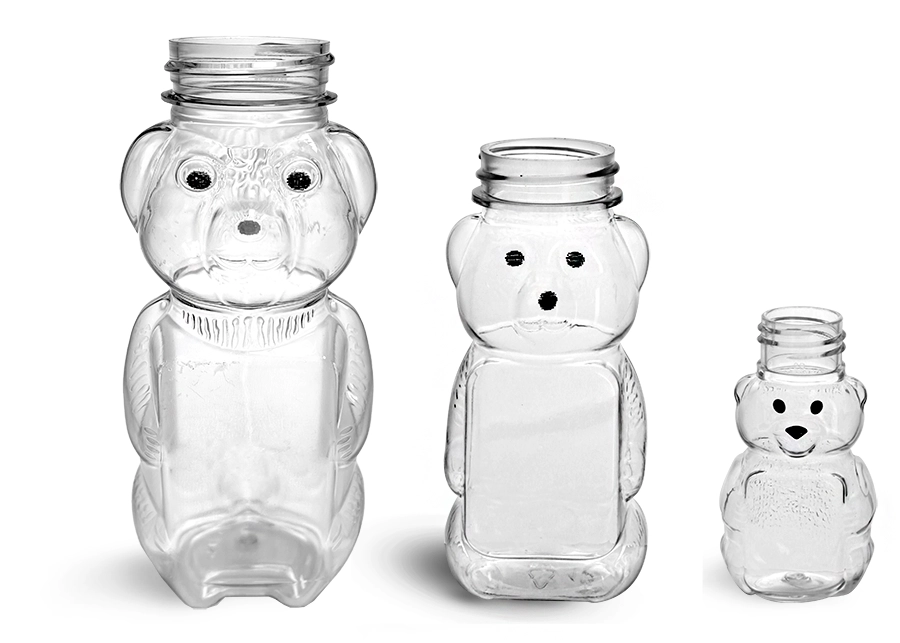 Clear PET Honey Bear Bottles (Bulk), Caps NOT Included
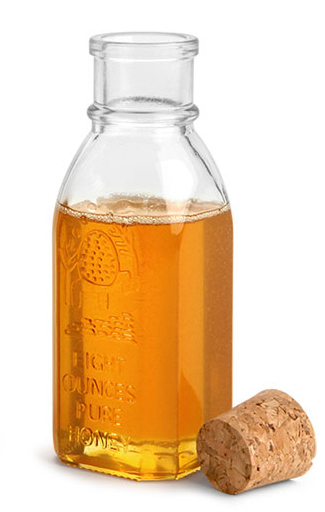 Glass Bottles, Clear Glass Muth Style Honey Bottles w/ Cork Stoppers
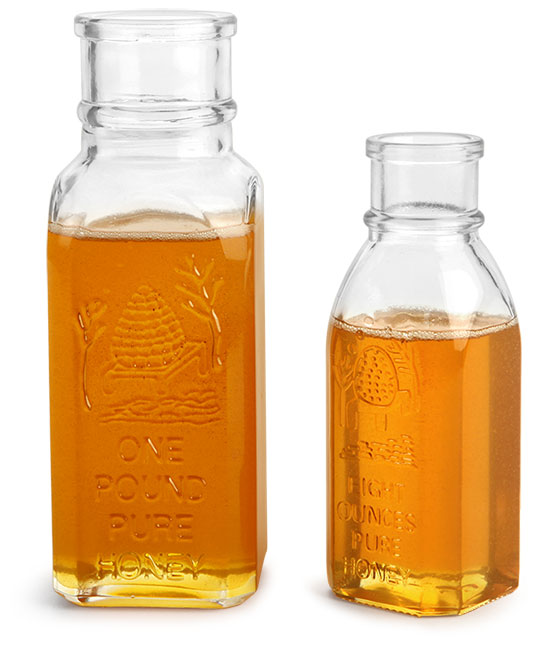 Clear Glass Muth Style Honey Bottle (Bulk), Corks NOT Included
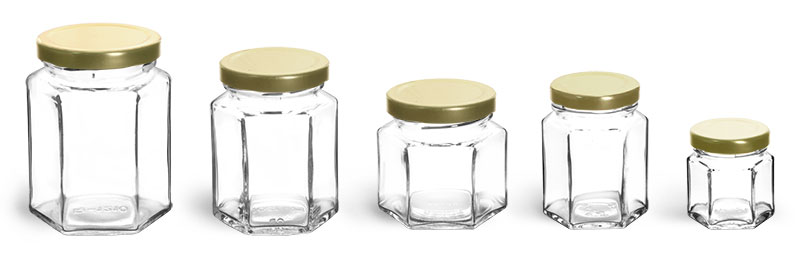 Clear Glass Jars, Clear Glass Hexagon Jars w/ Gold Lug Caps
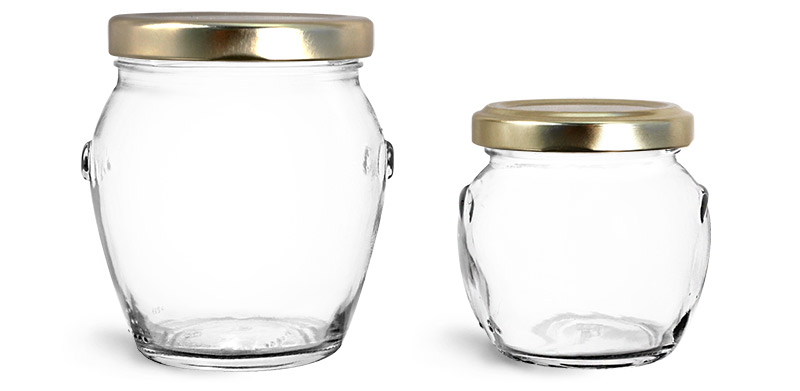 Clear Glass Jars, Clear Glass Honey Pot Jars w/ Gold Metal Plastisol Lined Lug Caps
 Clear Glass Jars, Clear Straight Sided Glass Jars w/ Black Metal Plastisol Lined Lug Caps
Beekeeping & Honey Containers FAQ
Honey's weight, viscosity, and tendency to crystallize make it a genuinely different packaging challenge than most liquid products. Get your weight-to-volume labeling right, choose a closure that won't seize up with residue, and offer sizing that matches how customers actually buy honey.
Is Glass or Plastic Better for Selling Honey?
Both work well - glass offers a premium, traditional presentation, while plastic squeeze bottles offer practical one-handed dispensing, especially for retail and shipping.
Why Does Honey Sometimes Get Stuck in the Cap Threads?
Honey's sticky, viscous texture can seep into cap threads over time, which is why a well-fitted lined cap that seals tightly against the container's finish matters for easy reopening.
Does a 12 oz Honey Jar Hold 12 Ounces of Honey by Weight?
Not exactly - honey is denser than water, so a container's fluid ounce volume doesn't map directly to weight. Confirm your actual fill weight in your specific container before finalizing net-weight labeling.
What Size Jar Should I Start With for Selling Honey?
Many beekeepers start with an 8 oz or 16 oz jar for everyday retail sale, often adding a smaller 2 to 4 oz size for samples or gift sets.
Are Squeeze Bottles Good for Crystallized Honey?
Squeeze bottles work best with honey that stays relatively fluid; heavily crystallized honey may dispense more easily from a wide-mouth jar with a spoon.
Why Businesses Choose SKS Bottle & Packaging
SKS Bottle & Packaging makes it easy to order bottles, jars, and packaging supplies online. From fast shipping to flexible savings programs, our goal is to help businesses of all sizes source reliable packaging with a smooth and efficient ordering experience.
Chat with Us